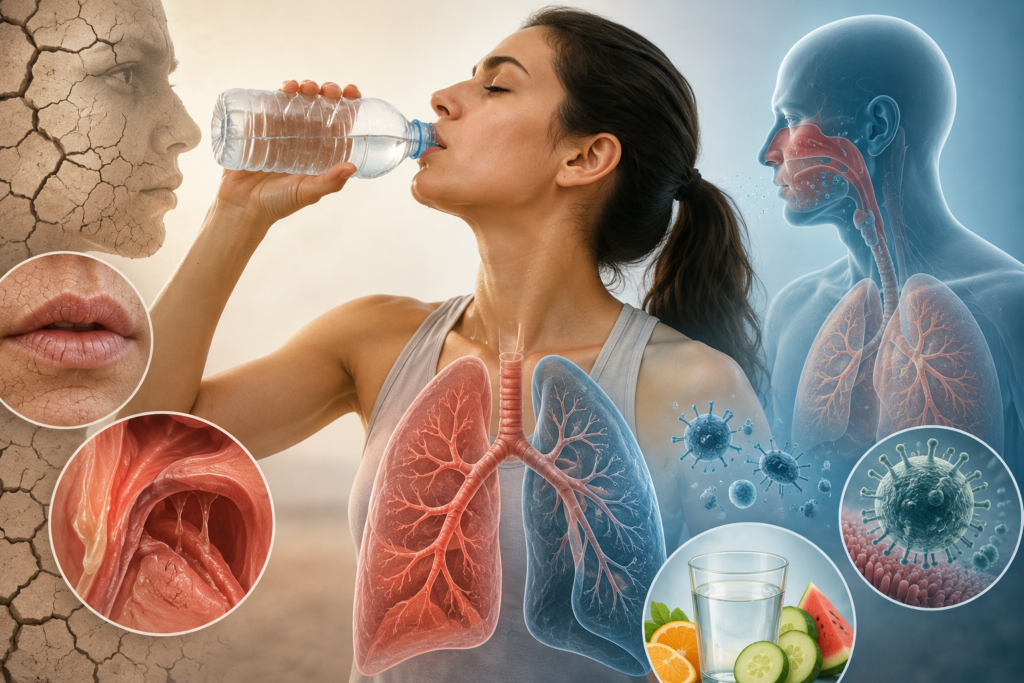
Most people associate dehydration with symptoms like thirst, weakness, or dizziness. However, very few realize that lack of proper hydration can also affect the lungs and breathing system. Water plays a vital role in maintaining healthy respiratory function, and when the body becomes dehydrated, the impact can extend far beyond dry skin or fatigue.
Understanding Dehydration
Dehydration occurs when the body loses more fluids than it takes in. This imbalance may happen due to excessive sweating, fever, vomiting, diarrhea, hot weather, or simply not drinking enough water throughout the day.
Our body is made up of nearly 60% water, and every organ depends on it to function properly—including the lungs.
How Dehydration Affects the Respiratory System
The respiratory tract is lined with a thin layer of mucus that helps trap dust, allergens, and harmful germs before they enter the lungs. When the body lacks water, this mucus becomes thicker and stickier, making it difficult for the airways to stay clear.
As a result, dehydration can lead to:
- Dryness in the throat and nasal passages
- Increased irritation in the airways
- Difficulty in clearing mucus
- Shortness of breath in some individuals
- Worsening of respiratory conditions
Even mild dehydration can make breathing feel uncomfortable, especially in people who already have lung-related issues.
People at Higher Risk
Certain individuals are more vulnerable to dehydration-related respiratory problems:
- Older adults
- Young children
- People with asthma or chronic lung diseases
- Individuals working in hot environments
- Patients recovering from infections or fever
For these groups, staying hydrated becomes especially important for maintaining healthy breathing patterns.
Impact on Existing Respiratory Conditions
Dehydration may worsen several respiratory illnesses and symptoms.
Asthma
People with Asthma often experience increased airway sensitivity. Dehydration can dry out the air passages, making them more prone to tightening and irritation, which may trigger wheezing or coughing episodes.
Respiratory Infections
When mucus becomes thick due to dehydration, the body struggles to clear bacteria and viruses effectively. This can increase the discomfort associated with colds, flu, bronchitis, or sinus infections.
Chronic Obstructive Pulmonary Disease (COPD)
In patients with Chronic Obstructive Pulmonary Disease, dehydration may make mucus harder to expel, leading to congestion and breathing difficulty.
Signs You Should Not Ignore
Sometimes dehydration develops gradually, and the warning signs may be overlooked. Common symptoms include:
- Dry mouth or lips
- Dark yellow urine
- Headache
- Fatigue
- Dizziness
- Dry cough or throat irritation
If breathing discomfort is accompanied by these symptoms, dehydration could be a contributing factor.
Simple Ways to Stay Hydrated
Maintaining hydration is one of the easiest ways to support respiratory health. Here are a few practical tips:
- Drink water regularly, even if you don’t feel thirsty
- Increase fluid intake during summer or illness
- Consume water-rich fruits like watermelon, oranges, and cucumber
- Limit excessive caffeine and alcohol intake
- Use oral rehydration solutions if advised during illness
People with respiratory conditions should pay extra attention to hydration during weather changes and infections.
Final Thoughts
Good respiratory health is not only about avoiding pollution or infections—it also depends on simple daily habits like proper hydration. Water helps the lungs function smoothly, keeps airways moist, and supports the body’s natural defense system.
Ignoring dehydration may silently affect breathing quality and worsen existing respiratory problems. By staying adequately hydrated and recognizing early symptoms, individuals can take an important step toward healthier lungs and overall well-being.
If you frequently experience breathing discomfort, persistent cough, or recurring respiratory issues, consulting an experienced specialist like Dr. Sumita Agrawal can help identify the underlying cause and guide you toward the right treatment.